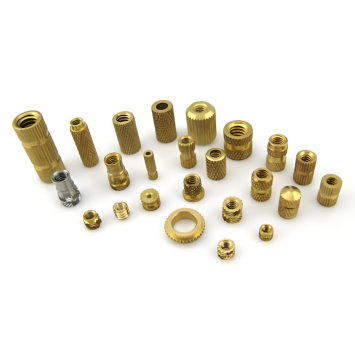
Common Types and Applications of Brass Nuts

In the fastener industry, brass nuts are widely used in mechanical manufacturing, electronics, electrical systems, and household equipment due to their excellent mechanical properties, corrosion resistance, and electrical conductivity. Compared with steel or stainless steel, brass offers better machinability, wear resistance, and aesthetics, making it the preferred choice for many precision components. This article introduces the most common types of brass nuts and analyzes their applications with real-world examples.
1. Common Types of Brass Nuts
1.1 Hex Nut
• The most common nut shape, used with bolts for various mechanical assemblies.
• Brass hex nuts provide excellent rust and corrosion resistance, making them ideal for outdoor equipment, marine parts, and decorative machinery.
1.2 Insert Nut
• Designed for use in plastic, wood, or composite materials, installed via heat staking, ultrasonic embedding, or press-fitting.
• Brass insert nuts, with their good thermal conductivity and machining precision, are widely used in 3D-printed parts, electronic housings, and home appliances.
1.3 Knurled Nut
• Features a knurled surface for better grip, allowing manual tightening or loosening without tools.
• Common in applications requiring frequent disassembly, such as electronic instruments, optical devices, and precision adjustment mechanisms.
1.4 Coupling Nut
• Longer in shape, used to connect two threaded rods or extend a thread.
• Brass coupling nuts are common in instrumentation and lab equipment, ensuring stable conductivity and structural integrity.
1.5 Lock Nut
• Uses nylon inserts or metal deformation to prevent loosening.
• Brass lock nuts are often used in vibration-prone environments such as motors, aerospace devices, and precision machinery.
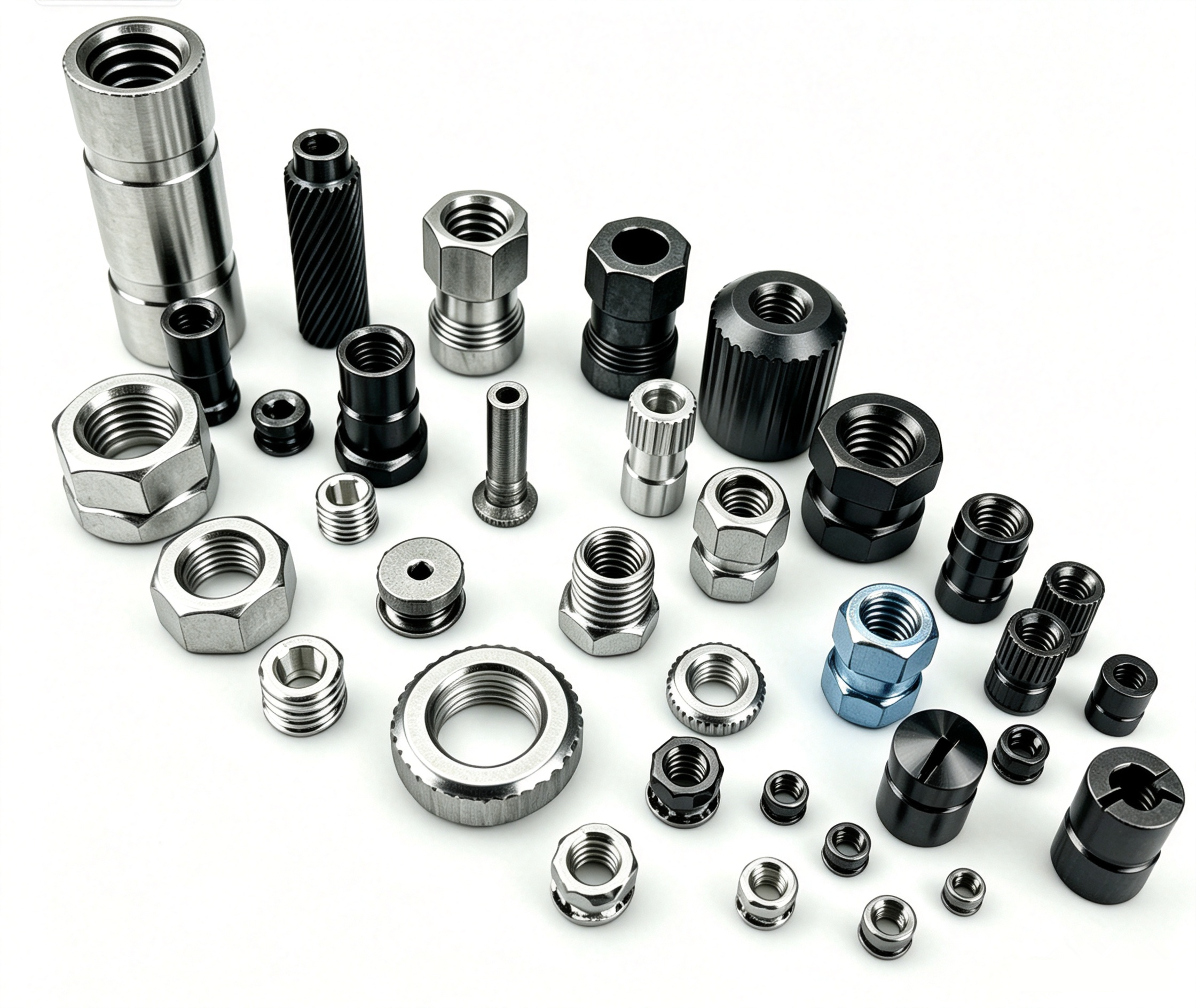
2. Comparison of brass nuts and steel nuts material properties
When reviewing the comparison of brass nuts and steel nuts material properties, purchasing engineers need to weigh mechanical strength, corrosion resistance, electrical-thermal performance and production cost for their project selection. Steel nuts, normally made from carbon steel or alloy steel, deliver far higher tensile strength and hardness. They can sustain heavy mechanical loads, high clamping force and dynamic vibration, which makes them the mainstream choice for structural fastening in machinery, automotive and heavy-duty equipment. Bare steel nuts are prone to rust in humid environments, so surface treatments such as zinc plating or black oxide are usually required to improve anti-rust performance.
Brass nuts cannot match steel nuts in tensile strength, yet they bring unique material merits that steel cannot replace. Brass features excellent electrical conductivity and thermal conductivity, non-magnetic property and spark-free performance, ideal for electrical assemblies, instrumentation and explosive-risk working conditions. Brass also has superior anti-galling performance; its internal threads resist seizure when assembling and disassembling repeatedly. Compared with untreated steel, brass offers natural corrosion resistance against moisture and many mild chemical media, no extra surface coating is needed for most indoor and general outdoor applications.
Cost and machinability are another core part within the comparison of brass nuts and steel nuts material properties. Steel raw material is cheaper for mass-volume orders, while brass material carries higher unit cost. Nevertheless, brass (especially leaded brass like HPb59-1) owns exceptional CNC machinability, supporting precise thread fabrication with fast cutting speed and low tool wear, which benefits custom-made small-batch nuts. In short, pick steel nuts for high-load structural fastening, and opt for brass nuts when you require conductivity, anti-spark property, anti-thread-gall and moderate corrosion resistance.
3. Application Fields of Brass Nuts
3.1 Electronics & Electrical Industry
• Brass offers excellent electrical conductivity and oxidation resistance, making it ideal for terminals and conductive connectors.
• Examples: distribution boxes, switch panels, transformer terminals, plug connectors.
3.2 Mechanical Manufacturing & Equipment
• Brass nuts provide better corrosion and wear resistance in machinery parts.
• Common uses: food processing machines, printing equipment, measuring instruments.
3.3 Home Appliances & Consumer Electronics
• Brass insert nuts bond firmly with plastic parts, improving durability and reusability.
• Examples: coffee machines, hair dryers, TV housings, PC cases.
3.4 Decorative & Architectural Hardware
• The gold-like appearance of brass is aesthetically pleasing, making it popular for decorative fastener applications.
• Examples: lamp brackets, furniture joints, door and window hardware.
3.5 Automotive & Aerospace
• Brass nuts maintain stable performance in high-vibration, high-corrosion, or high-temperature environments.
• Examples: sensor mounts, fuel systems, electronic control modules.
4. Conclusion
Brass nuts come in a variety of types and serve a wide range of industries. They play an important role not only in traditional mechanical manufacturing but also in high-precision fields such as electronics, home appliances, and automotive engineering. For customers with custom requirements, selecting the right nut type and manufacturing process can enhance product performance, extend service life, and reduce maintenance costs.
As a professional CNC machining manufacturer, we provide high-precision custom brass nuts according to customer drawings and specifications, covering everything from material selection and machining to surface finishing — ensuring top quality to meet the strict demands of various industries.