
How to Compare CNC Machining Quotes from Different Suppliers

Why the Cheapest CNC Machining Quote Is Often the Most Expensive Choice
Have you ever chosen the lowest-priced CNC machining quote, only to receive parts that fail tolerance inspection, arrive three weeks behind schedule, or lack the required material certifications? If so, you are far from alone.
In procurement, the instinct to select the lowest-priced supplier is deeply ingrained. However, in precision manufacturing—where tolerances are measured in thousandths of an inch and material integrity is non-negotiable—the cost of a bad supplier is rarely reflected in the initial quote. According to a 2022 study by the Institute for Supply Management (ISM), nearly 62% of procurement professionals reported that choosing a supplier based solely on price resulted in at least one significant quality or delivery failure within a 12-month period.
The reality is that CNC machining is not a commoditized service like purchasing office supplies. Each part tells a story of engineering complexity, machine capability, operator skill, and quality culture. Two seemingly identical quotes for the same custom machined part can differ by 100% or more, and those differences often reflect variations in manufacturing capabilities, quality standards, lead times, material sourcing, and service levels—not just profit margins.
This comprehensive guide will equip you with:
A systematic framework for comparing CNC machining quotes across 7 critical dimensions
Quantitative benchmarks and industry data to validate your decisions
A weighted scoring model to objectively evaluate suppliers
Red flags to watch for in every section of a quotation
Whether you are sourcing precision CNC machining for prototype development, low-volume production, or ongoing manufacturing, this guide will transform how you evaluate CNC machining services.

Part I: The Foundation – Standardizing Your RFQ to Enable True Comparison
1.1 The "Apples-to-Apples" Principle
Before any meaningful price comparison can occur, you must ensure that all suppliers are quoting on identical technical baselines. This sounds obvious, yet it is the single most common source of quote variation. A supplier who quotes on looser tolerances or commercial-grade material will always appear cheaper—but that cheap quote is a mirage that vanishes the moment your parts fail functional testing.
The RFQ Consistency Checklist:
| Parameter | What to Specify | Why It Matters |
|---|---|---|
| Material Grade & Temper | Exact alloy grade + heat treatment condition (e.g., 6061-T6, 7075-T651, 316L Stainless Steel, Ti-6Al-4V GR5); specify whether equivalent-strength substitute grades are acceptable. | Alloy Family Differences: 7075-T6 costs approximately 30-40% more than 6061-T6 due to zinc (Zn) alloying and more complex T6 heat treatment, yet delivers nearly double the ultimate tensile strength (~572 MPa vs ~310 MPa). Same Alloy, Different Temper: Taking 7075 as an example—T6 temper (solution treated + artificially aged) offers maximum strength but has higher stress corrosion cracking (SCC) susceptibility. T73 temper offers slightly lower strength (approximately 10-15% reduction) but significantly improved SCC resistance, at an additional cost of about 8-12%. Selecting the wrong temper may cause premature in-service failure. |
| Material Certification | ASTM/AMS standards, Mill Test Reports (MTRs) required | Aerospace and medical applications demand traceable materials; certification adds 5-10% to material cost. |
| Heat Treatment | T6, T651, annealed, or solution-treated | Post-machining stress relief can add 2-5 days and 8-15% to total cost. |
| Surface Finish | Ra/Rz values (e.g., 3.2μm Ra, 1.6μm Ra, 0.8μm Ra) | Reducing surface roughness from 3.2μm to 1.6μm increases finishing time by 15-20%; dropping to 0.8μm can double finishing costs. |
| Geometric Tolerances | GD&T per ASME Y14.5, specific critical features | Tolerances tighter than ±0.005" require slower machining, specialized tooling, and temperature-controlled environments. |
| Inspection Standards | CMM inspection, FAI per AS9102, visual criteria | A full dimensional inspection report adds 5-10% to quote but eliminates disputes. |
| Packaging | Anti-rust VCI paper, foam inserts, wooden crates | Export packaging can add - per shipment depending on size and weight. |
| Incoterms | EXW, FOB, DDP, etc. | Freight and customs duties significantly affect total landed cost. |
Industry Insight: According to the National Tooling and Machining Association (NTMA), up to 40% of quote discrepancies stem from misaligned specifications rather than actual pricing differences. Standardizing your RFQ eliminates this noise and reveals true cost competition.
1.2 The Cost of Not Standardizing: A Real-World Scenario
Consider a simple aluminum bracket requiring three machining operations. Supplier A quotes based on ±0.005" tolerances and standard anodizing. Supplier B quotes ,200 based on ±0.001" critical tolerances and Mil-Spec hard anodizing with full inspection reporting.
If you select Supplier A without comparing specifications, you may receive parts that:
Fail assembly due to oversized mating features
Corrode prematurely in your operating environment
Lack traceability, creating compliance risk
The rework cost—scrapping parts, reordering, and delaying your product launch—will almost certainly exceed the "savings" from the initial quote. A 2021 whitepaper from McKinsey & Company estimated that unplanned quality issues in manufacturing add an average of 15-25% to total project costs, effectively wiping out any savings from lower-priced suppliers.
Part II: Decoding Material Costs – Where the Savings (and Risks) Hide
2.1 The Raw Material Reality
Raw material selection is often the second-largest cost component in CNC machining quotes, after machining labor. However, material pricing is not as simple as checking a commodity index.
Key Material Cost Drivers:
Alloy Grade: Aerospace-grade titanium (Ti-6Al-4V) costs approximately - per pound, while standard 6061-T6 aluminum costs - per pound. These raw material differences cascade through the entire quote.
Form Factor: Bar stock, plate, and near-net forgings all have different pricing. Plate material often carries higher machining costs due to internal stresses.
Certification: Material with full traceability (Mill Test Reports, batch certification) commands a 10-15% premium over uncertified commercial-grade material.
Country of Origin: Under Section 301 tariffs, Chinese-origin aluminum may incur additional duties of up to 25% when imported into the U.S. Always verify origin if supply chain compliance is required.
2.2 What to Demand in Every Material Quote
When comparing CNC machining suppliers, ask for the following material-specific details in writing:
| Required Information | Why It's Critical |
|---|---|
| Grade & Temper | Prevents substitution of lower-cost grades (e.g., 6061 instead of 7075). |
| Supplier Source | Allows you to verify the material is from a reputable mill, not scrap remelt. |
| Mill Test Report (MTR) Availability | MTRs are mandatory for aerospace, medical, and defense applications. |
| Heat Treatment Records | Ensures material properties meet design specifications. |
| Dimensions of Raw Stock | Reveals whether the supplier is optimizing material utilization. |
2.3 Material Optimization = Cost Reduction
An experienced CNC machining partner does more than simply procure material—they optimize its use. Techniques that reduce material waste include:
Nesting multiple parts into a single plate to minimize offcuts
Using near-net shapes such as extrusions or forgings where possible
Recommending alternative materials that maintain performance at a lower cost
For example, where high strength is required but corrosion resistance is not critical, replacing 304 stainless steel with 4140 alloy steel can reduce material cost by 30-50% without sacrificing mechanical properties. A knowledgeable supplier will proactively suggest such alternatives during the quoting process.
Part III: Machining Complexity – The True Cost Driver
3.1 Beyond the Hourly Rate: Why 5-Axis Machining Can Be More Economical

The machining process itself is almost always the largest component of a CNC machining quotation—often accounting for 50-70% of total part cost. However, comparing hourly rates alone is deceptive.
Typical CNC Machine Hourly Rates (North America, 2024 Estimates):
| Machine Type | Hourly Rate (USD) | Typical Applications |
|---|---|---|
| 3-Axis Vertical Mill | - | Simple prismatic parts, prototyping |
| 4-Axis Mill (Indexing) | - | Parts requiring indexing on multiple faces |
| 5-Axis Simultaneous Mill | - | Complex contoured parts, impellers, aerospace structures |
| Swiss-Type Lathe | - | Small, high-precision turned components |
| EDM (Wire/Sinker) | - | Hard materials, complex internal geometries |
Data compiled from Gardner Intelligence (2023) and Hubbard-Hall Manufacturing Benchmarking Report.
At first glance, a 5-axis machine's /hour rate appears significantly more expensive than a 3-axis mill at /hour. However, total cost must be calculated on a "cost-per-part" basis, not "cost-per-hour."
Case Example: Complex Bracket with Angled Holes
| Approach | Hourly Rate | Setups Required |
|---|---|---|
| Supplier A (3-Axis, Multiple Fixtures) | /hr | 4 setups |
| Supplier B (5-Axis, Single Setup) | /hr | 1 setup |
Supplier B delivers the same part 12% cheaper and with higher accuracy (since multiple setups introduce alignment errors). This counterintuitive result demonstrates why evaluating quotes requires understanding the process, not just the price.
3.2 Complexity Factors That Drive Machining Cost
The following design elements significantly increase machining time—and therefore cost:
| Complexity Factor | Impact on Cost | Mitigation Strategy |
|---|---|---|
| Deep Cavities | Requires long-reach tools, slower feed rates (+20-40% time) | Design with depths no more than 4× tool diameter where possible. |
| Thin Walls | Requires specialized toolpaths, risk of chatter (+15-30% time) | Add ribs or increase wall thickness if structurally feasible. |
| Sharp Internal Corners | Requires EDM or custom ground tools (+50-100% time/cost) | Specify radii of at least 0.5mm (0.020") to use standard end mills. |
| Tight Tolerances (±0.001" or less) | Slower feeds, multiple finishing passes, temperature control (+30-50% time) | Relax tolerances on non-critical features. |
| Hard Materials (>40 HRC) | Requires carbide tooling, slower cutting speeds (+40-60% time) | Consider design changes to use pre-hardened material only where needed. |
| Extremely Small Features (<0.5mm) | Requires micro-tooling, high-speed spindles (specialized equipment) | Evaluate if the feature can be achieved through additive or EDM processes. |
3.3 The Role of CAM Programming
Programming costs are often overlooked in quote comparisons, yet they represent a substantial investment. Complex 5-axis programs can require 8-40 hours of CAM time at - per hour, representing -,000 in upfront engineering.
What to Ask:
Is programming included in the quote or a separate line item?
For repeat orders, is the programming cost amortized across the first order only, or will it be recharged on every batch?
Does the supplier use advanced CAM software (e.g., Mastercam, Hypermill, NX) capable of handling complex geometries?
A supplier who invests in high-quality CAM programming upfront will deliver more consistent parts over the long run. A quote that appears artificially low may have excluded programming costs entirely—or used oversimplified toolpaths that produce poor surface finish.
Part IV: Surface Finishing – The Invisible Cost Center
4.1 Finishing as a Quote Variable
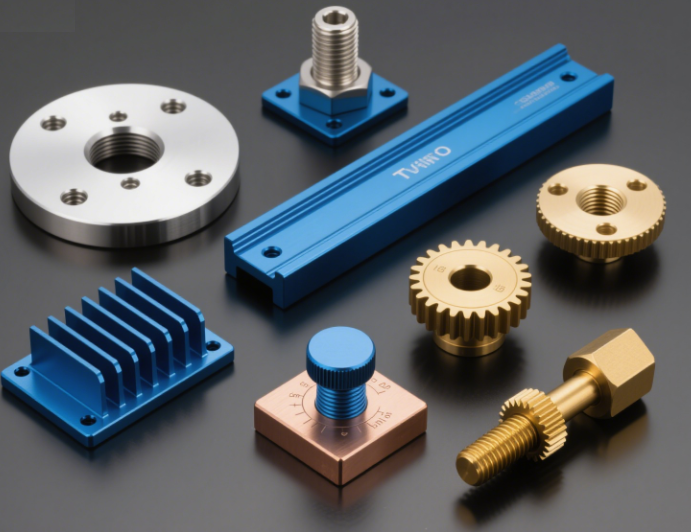
Many buyers focus intently on raw machining costs and overlook the finishing stage. Yet surface finishing can represent 15-35% of the total quoted price depending on the part and specification. Worse, some suppliers exclude finishing entirely from their initial quote, adding it later as a "change order" after you've already committed.
Common CNC Machining Surface Finishes and Cost Ranges (Indicative per part, small batch):
| Finish Type | Typical Cost Impact | Key Considerations |
|---|---|---|
| As-Machined | Baseline cost | Surface roughness typically 3.2-6.3μm Ra; visible tool marks. Suitable for non-cosmetic internal components. |
| Bead/Sand Blasting | +5-15% | Creates uniform matte finish; removes tool marks. Ensure grit residue is fully removed before further processing. |
| Anodizing (Type II, Clear) | +10-20% | Adds wear and corrosion resistance; dyes available. Does not provide significant hardness. |
| Anodizing (Type III, Hard Coat) | +15-35% | Hardness up to 60 HRC; excellent wear resistance; typically dark gray/green. Dimensionally adds 0.001-0.002" per surface. |
| Powder Coating | +15-35% | Thick, durable coating; ideal for heavy-duty applications. Masking required for threaded holes; may affect tight tolerances. |
| Electropolishing | +10-30% | Removes surface micro-burrs; improves corrosion resistance. Excellent for medical and food-grade applications. |
| Passivation (Stainless Steel) | +5-15% | Removes surface iron contamination; restores corrosion resistance. Mandatory for aerospace and medical stainless parts. |
| Black Oxide | +5-15% | Thin conversion coating; minimal dimensional change. Provides mild corrosion resistance and aesthetic dark finish. |
| Chemical Film (Alodine/Alocrom) | +5-15% | Electrical conductivity and corrosion protection; often used in aerospace electronics. |
4.2 Questions to Ask About Finishing in Every CNC Machining Quote
To avoid surprises, request the following details for every finishing process included in a quote:
Is the finishing performed in-house or by a subcontractor? (Subcontracted finishing carries quality control risk and adds 2-5 days to lead time.)
Is masking included? (Protecting threads, bores, and critical mating surfaces requires labor and materials.)
Is the finish dimensionally verified? (Some finishes, like hard anodizing, build up on surfaces and can affect fit.)
Is there a minimum order quantity (MOQ) for the finishing service? (Some finishing lines have batch minimums—you may be paying for a full tank even if you only have 10 parts.)
Are finish specifications matched to an industry standard? (e.g., MIL-A-8625 for anodizing, ASTM B633 for zinc plating)
Part V: Quality and Inspection – The Real Price of Peace of Mind
5.1 The Economics of Quality
In precision CNC machining, quality is not an abstract virtue—it is a quantifiable line item that includes measurement equipment calibration, operator training, inspection labor, and documentation. Suppliers who invest in quality systems pass those costs into their pricing. Suppliers who don't... also pass those costs—but in the form of rework, scrap, and late deliveries that you absorb.
When selecting a supplier, priority should be given to those holding ISO 9001:2015 Quality Management System certification. This internationally recognized standard serves as the foundational quality benchmark in manufacturing, demonstrating that the supplier has established robust process controls and a commitment to continuous improvement.
According to the American Society for Quality (ASQ), organizations with robust QMS certifications experience approximately 55% fewer quality-related incidents than uncertified competitors. The cost of a single quality escape—including rework, scrap, expedited shipping, and potential customer penalties—typically ranges from 5 to 20 times the original part cost.
5.2 Inspection Capabilities That Matter

When comparing CNC machining quotes, verify the supplier's inspection capabilities against your part's requirements:
| Inspection Method | Typical Application | Added Cost Factor |
|---|---|---|
| Visual Inspection | Surface defects, burrs, overall appearance | Minimal (included in most quotes) |
| Hand Tools (Calipers, Micrometers) | Basic dimensional checks (±0.005" capability) | Low (~2-5%) |
| CMM (Coordinate Measuring Machine) | Complex geometries, tight tolerances, formal reports | Moderate (~5-10%) |
| Optical Comparators / Vision Systems | Small features, complex profiles | Moderate (~5-8%) |
| Surface Roughness Tester | Surface finish verification | Low (~2%) |
| Hardness Tester | Material property verification | Low (~2%) |
| FAI (First Article Inspection) per AS9102 | Comprehensive process validation; usually required before production begins | High (~15-25% of first-order cost) |
| Non-Destructive Testing (NDT) | Internal defects, cracks (dye penetrant, X-ray, ultrasound) | High (varies widely) |
5.3 The FAI Requirement: A Case Study
A service robotics startup was developing a precision reducer housing for its new generation of autonomous mobile robots (AMRs). The part featured multiple high-tolerance bearing mounting bores and complex internal oil-routing channels. The procurement team received quotes from three CNC machining suppliers:
| Supplier | Quote Price | FAI Included? | CMM Report Included? | Total Evaluation |
|---|---|---|---|---|
| A | ,250 | No (extra ) | No (extra ) | Total ,700 |
| B | ,550 | Yes | Yes | Total ,550 |
| C | ,850 | Yes | Yes, with full traceability documentation package | Total ,850 |
Supplier A's initially attractive quote became more expensive than Supplier B once required inspection services were added. Supplier C's premium included a more comprehensive traceability documentation package (material lot traceability + heat treatment records + process parameter logs). For robotics companies pursuing FDA or CE certification, such documentation can be directly leveraged as supporting evidence, significantly reducing internal engineering hours spent on report compilation—value that far outweighs the premium.
Part VI: Lead Times and Delivery Reliability
6.1 The Rush Fee Reality
In today's fast-paced product development environment, lead time is often a non-negotiable constraint. However, accelerated delivery comes at a cost. The industry standard for "rush" or expedited service is typically a 20-50% premium over standard lead time, reflecting:
Priority machine scheduling (displacing other jobs)
Overtime labor costs (1.5× to 2× base wage)
Expedited material sourcing (using higher-cost suppliers)
Air freight vs. ground shipping for raw materials
Standard Lead Time Benchmarks (Indicative):
| Order Type | Part Complexity | Typical Lead Time |
|---|---|---|
| Simple Prototype | Prismatic, ≤ 3 setups | 5-10 business days |
| Complex Prototype | 5-axis, tight tolerances | 10-15 business days |
| Production Run (1-100 pcs) | Standard complexity | 2-4 weeks |
| Production Run (100-1000 pcs) | High complexity | 4-8 weeks |
6.2 Red Flags in Lead Time Quoting
Watch out for these warning signs:
| Red Flag | Why It's Concerning |
|---|---|
| Unrealistically short lead times | Supplier may outsource work, compromise quality, or use untested processes. |
| Vague delivery terms (e.g., "approximately" without dates) | No accountability; expect delays. |
| No mention of shipping time in the lead time | The part may be finished on time but spend 2 weeks in transit. |
6.3 How to Vet Delivery Reliability
Before selecting a supplier, ask:
"What is your historical On-Time Delivery (OTD) percentage over the last 12 months?" (A world-class supplier will be at 95% or above.)
"How many CNC machines do you operate, and what is your current capacity utilization?" (Over 85% utilization may indicate strained schedules.)
"What is your back-up plan if a machine goes down?" (Does the supplier have redundancy?)
Part VII: Engineering Support and Communication – The Strategic Advantage
7.1 Communication: The Soft Skill with Hard Consequences
Poor communication is one of the leading causes of manufacturing defects and delays. When comparing quotes, evaluate supplier responsiveness and clarity:
| Factor | What to Observe |
|---|---|
| Response Time | Do they reply to technical questions within 24 hours? (A 48-hour lag in China may mean 72 hours by U.S. time—too slow.) |
| Clarity of Response | Do they answer all questions directly, or avoid specifics? |
| Proactive Questions | Do they ask clarifying questions about your design, application, or quality requirements? (This indicates engagement.) |
| Language Proficiency | Is technical English (or your language) fluent enough to avoid misinterpretation? |
| Documentation Quality | Are quotes, inspection reports, and certifications professionally formatted and clearly presented? |
7.2 The Cost of Poor Communication
Consider this real-world example from a U.S.-based medical device startup:
Supplier A (Cheapest, overseas): Responded within 3 days to questions. Misunderstood the difference between "passivation" and "electropolishing." Produced 100 parts with the wrong surface finish. Scrap cost: ,000. Delay: 3 weeks.
Supplier B (Slightly more expensive, better communication): Responded within 12 hours. Confirmed every requirement back to the customer. Delivered parts on time, with correct finish. Additional cost vs. Supplier A: . Total savings: ,200 plus 3 weeks of project timeline.
The math is clear: Communication is not a "nice-to-have"—it is a critical risk management capability.
Part VIII: Decision Matrix – Objectively Score Your CNC Machining Suppliers
8.1 Weighted Scoring Model
To eliminate bias and make a data-driven decision, use the following weighted scoring model. This approach ensures you are selecting a supplier based on total value—not just the lowest line-item price.
| Evaluation Factor | Weight | Why This Weight |
|---|---|---|
| Unit Price Competitiveness | 20% | Important, but not the whole story. |
| Quality Capability (Certifications, Inspection, Equipment) | 25% | Heaviest weight—quality failures are the most costly. |
| Lead Time Reliability (OTD Performance) | 15% | Schedule delays cascade through your entire product timeline. |
| Engineering Support | 15% | Proactive engineering saves far more than it costs. |
| Communication Responsiveness & Clarity | 15% | Miscommunication is a root cause of most manufacturing problems. |
| Production Capacity & Scalability | 10% | Can they handle your growth? |
Scoring Guide:
1 = Poor: Significant concerns; lacks required capability or transparency.
2 = Below Average: Meets minimum requirements with noticeable gaps.
3 = Average: Meets standard industry expectations; no significant concerns.
4 = Above Average: Exceeds expectations in multiple areas.
5 = Excellent: Best-in-class capability; demonstrates clear leadership.
Weighted Score Calculation: Weighted Score = (Score × Weight) for each factor, summed across all factors.
Example:
Supplier A: Price Score 5 (25%×20%=5), Quality Score 3 (75%×25%=18.75), Communication Score 2 (30%×15%=4.5)... Total = 64.25 (out of 100)
Supplier B: Price Score 3 (60%×20%=12), Quality Score 5 (100%×25%=25), Communication Score 5 (75%×15%=11.25)... Total = 80.00 (out of 100)
Conclusion: Supplier B, with the higher price, actually delivers 24% more overall value than Supplier A.
Brightstar Prototype CNC Advantage
At Brightstar Prototype CNC Co., Ltd, we understand that comparing CNC machining quotes can be overwhelming. That's why we have designed our quoting and production process to be transparent, comprehensive, and engineering-driven.
We are equipped with multiple high-precision CNC machining centers, supporting 3-axis, 4-axis, and 5-axis simultaneous machining. Our capabilities range from simple prismatic parts to complex contoured components, handling everything from rapid prototypes to low-to-medium volume production with consistent stability and efficiency. Our engineering team brings years of hands-on experience in precision machining, with deep expertise across a wide range of materials—including aluminum alloys, stainless steel, titanium, and engineering plastics—and complex processing techniques. We quickly understand your technical requirements and deliver professional process solutions.
During the quoting phase, we provide realistic, achievable lead times and keep you updated weekly on production progress. For all production orders, we provide CMM inspection reports, First Article Inspection (FAI) reports, and material certification documentation. A dedicated project manager serves as your single point of contact from quote to delivery, ensuring seamless communication. We are ISO 9001:2015 certified, guaranteeing consistent, reliable production results.
Our services cover the entire product lifecycle—from rapid prototyping to low-to-medium volume production—with consistent quality throughout, eliminating the need to re-qualify a new supplier when transitioning from prototype validation to production. Choosing Brightstar means securing not just a quote, but a long-term, reliable precision manufacturing partner.
Frequently Asked Questions (FAQ)
Q1: Why do CNC machining quotes vary so widely for the same part?
A: Variation arises from differences in material sourcing (certified vs. commercial-grade), machine type (3-axis vs. 5-axis), tolerance assumptions (standard vs. tight), inspection services included (visual vs. CMM), setup amortization (one-time vs. recurring), and finishing scope. Always compare the full Scope of Work, not just the total price. According to the National Tooling and Machining Association, up to 40% of quote variation can be attributed to specification misalignment rather than actual cost differences.
Q2: How do I know if a CNC machining supplier's quality claims are legitimate?
A: Request their ISO 9001 or AS9100 certificate and verify it on the certifying body's website. Ask for examples of inspection reports from previous orders. Request material traceability documentation (Mill Test Reports) as part of the quote. A legitimate quality-focused supplier will be transparent about these items. The American Society for Quality (ASQ) recommends conducting an on-site or virtual audit for high-value or critical parts.
Q3: Should I choose an overseas supplier with a lower price or a local supplier?
A: Consider the Total Landed Cost—which includes unit price + shipping + customs duties + potential communication costs + quality audit expenses + longer lead times. A 2023 analysis by Supply Chain Dive found that when all factors are included, overseas suppliers were only 5-15% cheaper on average than domestic suppliers, and that gap is narrowing due to rising shipping costs and tariff uncertainties. For critical or complex parts, the reduced risk of local (or "nearshore") sourcing often outweighs the price premium.
Q4: What is a "complete" CNC machining quotation supposed to include?
A: A transparent and complete quote should specify: material grade and cost, machining process, estimated cycle time, setup/programming fees, any required surface finishing (with specification), inspection and reporting inclusions, packaging, and delivery terms (Incoterms). If any of these items are missing, request clarification before comparing quotes.
Q5: How can I reduce the CNC machining cost of my custom machined parts?
A: The most impactful cost-reduction strategies are: (1) relaxing unnecessarily tight tolerances on non-critical features (saving 10-30%), (2) designing with standard tool sizes to avoid custom tooling (saving 5-15%), (3) increasing batch quantity to amortize setup costs (saving 20-40% on per-part cost), (4) selecting standard materials versus exotic alloys where performance allows (saving 15-50%).
Q6: How do I compare lead times when suppliers give different estimates?
A: Distinguish between "production lead time" (when the parts will be finished) and "total delivery lead time" (when they arrive at your dock). Ask for a production schedule that includes material procurement, machining, finishing, and inspection phases. Request historical On-Time Delivery (OTD) metrics—a 95%+ OTD rate indicates a reliable supplier. Be cautious of quotes with lead times significantly shorter than industry averages (see Part VI benchmarks), as this may indicate risk-prone shortcuts or underestimation.
Q7: Should a CNC machining supplier offer both prototyping and production services?
A: An ideal CNC machining partner should support the full product lifecycle—from rapid prototyping (1-50 pieces, fast turnaround) to low-to-medium volume production (50-5,000 pieces per year). Choosing a single supplier that offers both services ensures continuity in quality standards, tooling strategies, and documentation throughout the transition. This eliminates the need to re-qualify a new supplier after prototype validation, effectively reducing project risk and procurement management costs.
Q8: How do I handle intellectual property (IP) protection when sharing CAD files with overseas CNC machining suppliers?
A: Protect your IP by: (1) executing a Non-Disclosure Agreement (NDA) before sharing files, (2) using watermarked PDFs for initial reviews rather than native CAD files, (3) sharing neutral formats (STEP, IGES) rather than editable native formats if possible, (4) verifying the supplier's IT security policies (e.g., data encryption, access controls), and (5) considering a split-production approach where only partially completed parts are shared with external suppliers. At Brightstar, we treat all customer designs as strictly confidential and adhere to international IP protection standards.
Q9: What should I do if a supplier's quote is significantly lower than all others?
A: Approach with caution. Investigate: (1) Are they quoting on different specifications? (2) Have they omitted material certification, inspection, or finishing? (3) Are they using lower-grade materials or looser tolerances? (4) Is the company established or newly formed? (5) Do they have references for similar parts? The Institute for Supply Management (ISM) advises procurement professionals to treat outlier-low quotes as a "red flag" requiring thorough verification before award.
Choose a Manufacturing Partner, Not Just a Price
Comparing CNC machining quotes requires moving beyond the bottom-line cost to evaluate the complete value proposition. A trustworthy CNC machining supplier provides:
Clear and complete quotation
Robust quality systems with certifications and inspection capabilities
Strong engineering support for optimization, and problem-solving
Dependable delivery backed by proven OTD performance
Clear and proactive communication throughout the project lifecycle
By applying the framework outlined in this guide—standardizing specifications, decoding hidden costs, evaluating quality and engineering capabilities, and using a weighted decision matrix—you can confidently select a partner that delivers superior value, reduces risk, and improves your long-term manufacturing outcomes.
At Brightstar Prototype CNC Co., Ltd, we build long-term partnerships by delivering quality, reliability, and transparency with every order. Contact us today to experience the difference of working with a true precision machining partner.

References and Further Reading
American Society for Quality (ASQ). (2022). Cost of Quality: The Economics of Non-Conformance. ASQ Quality Press. (Data on quality incident costs and certification benefits.)
Gardner Intelligence. (2023). 2023 Capital Spending Survey & Machining Cost Benchmark Report. Gardner Business Media. (Hourly rate data for 3-axis, 4-axis, and 5-axis CNC machining.)
Institute for Supply Management (ISM). (2022). Supplier Selection and Evaluation Best Practices. ISM Research Report. (Statistics on procurement failures and supplier selection criteria.)
Journal of Manufacturing Technology Management. (2021). The Impact of Early Supplier Involvement on New Product Development Performance. Volume 32, Issue 4, pp. 789-808. (Quantified savings from ESI: 18.6% cost reduction, 22.3% time-to-market improvement.)
McKinsey & Company. (2021). The Hidden Costs of Quality Failures in Manufacturing. McKinsey Operations Practice. (15-25% total project cost increase due to unplanned quality issues.)
National Tooling and Machining Association (NTMA). (2023). Quoting Best Practices for Precision Machined Parts. NTMA Technical Bulletin. (Quote variation statistics and standardization recommendations.)
Supply Chain Dive. (2023). The Real Cost of Overseas Sourcing: Tariffs, Freight, and Lead Times. Industry Analysis Report. (Total landed cost comparisons.)
ASME Y14.5-2018. Dimensioning and Tolerancing Engineering Drawings. American Society of Mechanical Engineers. (GD&T standard for specification clarity.)
Disclaimer
All quantitative data (percentages and hourly rates) provided in this article are for illustrative and educational purposes only, based on industry averages. Actual costs may vary depending on specific part geometry, fluctuations in raw material market prices, and regional labor rates. For accurate project costing, Brightstar Prototype CNC Co., Ltd recommends contacting our team directly for current quotes tailored to your specific requirements.